Main menu

  • HOME
  • CONTENT
    • Early Release
    • Featured
    • Current Issue
    • Issue Archive
    • Blog
    • Collections
    • Podcast
  • TOPICS
    • Cognition and Behavior
    • Development
    • Disorders of the Nervous System
    • History, Teaching and Public Awareness
    • Integrative Systems
    • Neuronal Excitability
    • Novel Tools and Methods
    • Sensory and Motor Systems
  • ALERTS
  • FOR AUTHORS
  • ABOUT
    • Overview
    • Editorial Board
    • For the Media
    • Privacy Policy
    • Contact Us
    • Feedback
  • SUBMIT

User menu

Search

  • Advanced search
eNeuro
eNeuro

Advanced Search


  • HOME
  • CONTENT
    • Early Release
    • Featured
    • Current Issue
    • Issue Archive
    • Blog
    • Collections
    • Podcast
  • TOPICS
    • Cognition and Behavior
    • Development
    • Disorders of the Nervous System
    • History, Teaching and Public Awareness
    • Integrative Systems
    • Neuronal Excitability
    • Novel Tools and Methods
    • Sensory and Motor Systems
  • ALERTS
  • FOR AUTHORS
  • ABOUT
    • Overview
    • Editorial Board
    • For the Media
    • Privacy Policy
    • Contact Us
    • Feedback
  • SUBMIT
PreviousNext
Research ArticleResearch Article: Confirmation, Disorders of the Nervous System

Deficiency of Complement Component C1Q Prevents Cerebrovascular Damage and White Matter Loss in a Mouse Model of Chronic Obesity

Leah C. Graham, Heidi E. Kocalis, Ileana Soto and Gareth R. Howell
eNeuro 9 April 2020, 7 (3) ENEURO.0057-20.2020; https://doi.org/10.1523/ENEURO.0057-20.2020
Leah C. Graham
1The Jackson Laboratory, Bar Harbor, ME 04609
2Graduate School of Biomedical Sciences, Tufts University School of Medicine, Boston, MA 02111
  • Find this author on Google Scholar
  • Find this author on PubMed
  • Search for this author on this site
  • ORCID record for Leah C. Graham
Heidi E. Kocalis
1The Jackson Laboratory, Bar Harbor, ME 04609
  • Find this author on Google Scholar
  • Find this author on PubMed
  • Search for this author on this site
Ileana Soto
3Department of Molecular & Cellular Biology, Rowan University, Glassboro, NJ 08028
  • Find this author on Google Scholar
  • Find this author on PubMed
  • Search for this author on this site
Gareth R. Howell
1The Jackson Laboratory, Bar Harbor, ME 04609
2Graduate School of Biomedical Sciences, Tufts University School of Medicine, Boston, MA 02111
4Graduate School of Biomedical Sciences and Engineering, University of Maine, Orono, MA 04469
  • Find this author on Google Scholar
  • Find this author on PubMed
  • Search for this author on this site
  • Article
  • Figures & Data
  • Info & Metrics
  • eLetters
  • PDF
Loading

Article Figures & Data

Figures

  • Extended Data
  • Figure 1.
    • Download figure
    • Open in new tab
    • Download powerpoint
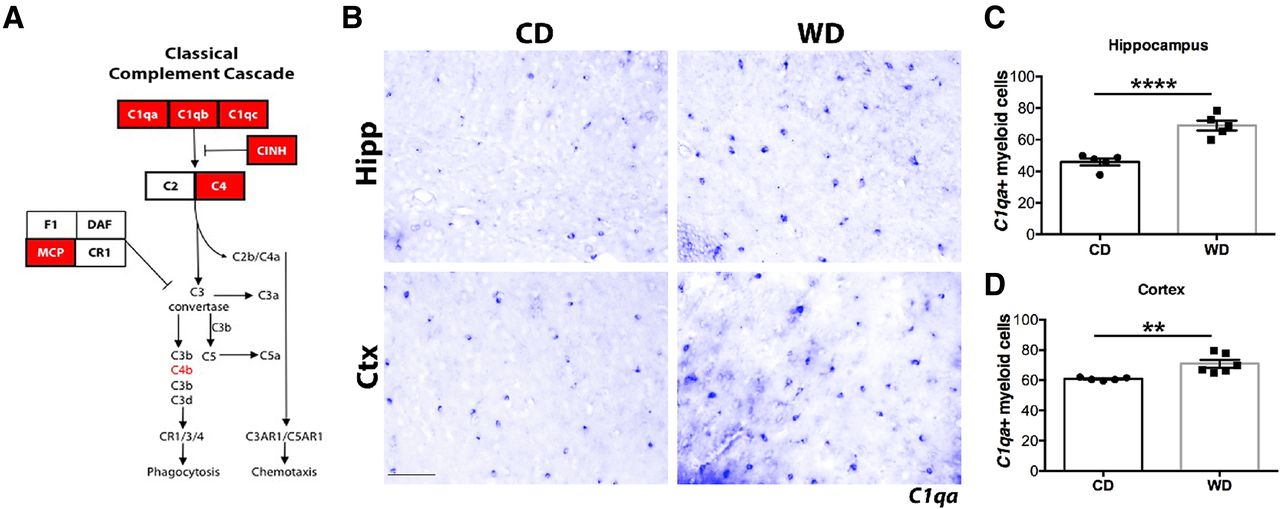
    Figure 1.

    Complement components are increased in brains of WD-fed obese mice. A, Expression of complement proteins upregulated in brains of WD-fed mice (red boxes). B–D, Increased number of C1qa+ cells in the hippocampus and cortex of WD-fed mice. Data are presented as mean ± SEM, n ≥ 5, **p < 0.01 and ****p < 0.001 by paired t test. Scale bars: 50 μm.

  • Figure 2.
    • Download figure
    • Open in new tab
    • Download powerpoint
    Figure 2.

    C1QA and C3 deposits increase in white matter tracts of WD-fed mice. A, Increased C1QA immunoreactivity in the corpus callosum of WD-fed compared with CD-fed mice colocalized with IBA1+ cells and MBP+ myelin. B, Increased C3 immunoreactivity in the corpus callosum of WD-fed compared with CD-fed mice colocalized with MBP+ myelin. White dotted lines indicate the boundary between the CA1 region of the hippocampus and the corpus callosum. Scale bars: 40 μm.

  • Figure 3.
    • Download figure
    • Open in new tab
    • Download powerpoint
    Figure 3.

    WD-induced obesity and metabolic profiles were not altered by C1QA deficiency. A–D, Weight and adiposity increased in WD-fed mice independent of genotype and sex. E–H, No differences were detected in total cholesterol (E, G) and triglycerides (F, H) between WD-fed WT and C1qa KO mice. I–L, LDL and HDL plasma levels in male and female WD-fed mice were not changed by C1QA deficiency. M, N, Fatty acids plasma levels were not altered by C1QA deficiency. Data are presented as mean ± SEM, n ≥ 5, *p < 0.05, **p< 0.01, ***p< 0.001, ****p < 0.0001 by one-way ANOVA with Tukey’s post hoc test. n.s., not significant.

  • Figure 4.
    • Download figure
    • Open in new tab
    • Download powerpoint
    Figure 4.

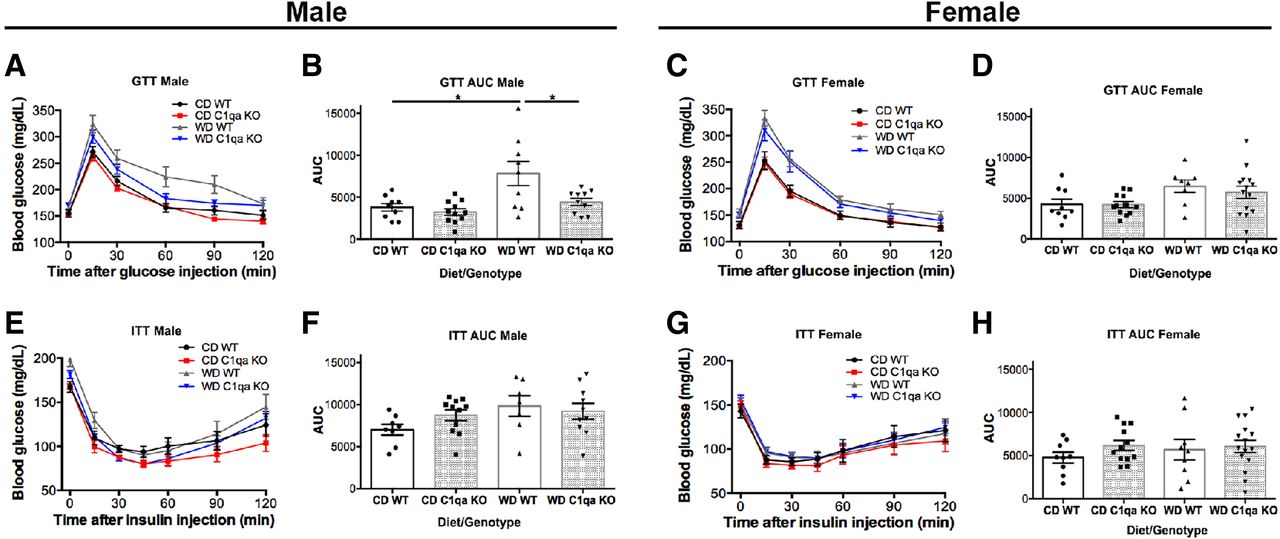
    C1QA deficiency did not alter glucose or insulin tolerance in obese mice. A–D, No significant changes were detected in glucose tolerance between genotypes and sex. Only WD-fed male mice showed a moderate impaired glucose tolerance that was prevented by C1QA deficiency (B). E–H, No changes were observed in the ITT between groups. Data are presented as mean ± SEM, n ≥ 5, *p < 0.05 by one-way ANOVA with Tukey’s post hoc test.

  • Figure 5.
    • Download figure
    • Open in new tab
    • Download powerpoint
    Figure 5.

    C1QA deficiency prevented WD-induced cognitive deficits in male mice. A, B, WD-fed male mice showed a significant impairment in % correct alternation (A), which was not due to reductions in total activity as measured by total arm entries (B). However, C1qa KO WD-fed male mice showed no significant impairment in % correct alternations when compared with CD-fed male mice. C, D, No differences were observed in % correct alternations between CD-fed and WD-fed female mice. E, G, Activity levels in the open field as measured by cumulative distance traveled revealed no differences between groups in both male and female mice. F, H, Grip strength measurements were not different between groups in both male and female mice. Data are presented as mean ± SEM, n ≥ 8, *p < 0.05 by one-way ANOVA with Tukey’s post hoc test.

  • Figure 6.
    • Download figure
    • Open in new tab
    • Download powerpoint
    Figure 6.

    C1QA deficiency prevented WD-diet induced cerebrovascular damage. A–C, WD-induced decrease in PDGFRβ+ pericytes in WT mice was prevented by C1QA deficiency (A, B). The decrease of laminin+ capillary density caused by WD was prevented by C1QA deficiency (A, C). Representative images are from a region of the parietal cortex (above the CA1 region of the hippocampus; see Materials and Methods). Data are presented as mean ± SEM, n ≥ 5, *p < 0.05 by one-way ANOVA with Tukey’s post hoc test. Scale bars: 30 μm. n.s., not significant.

  • Figure 7.
    • Download figure
    • Open in new tab
    • Download powerpoint
    Figure 7.

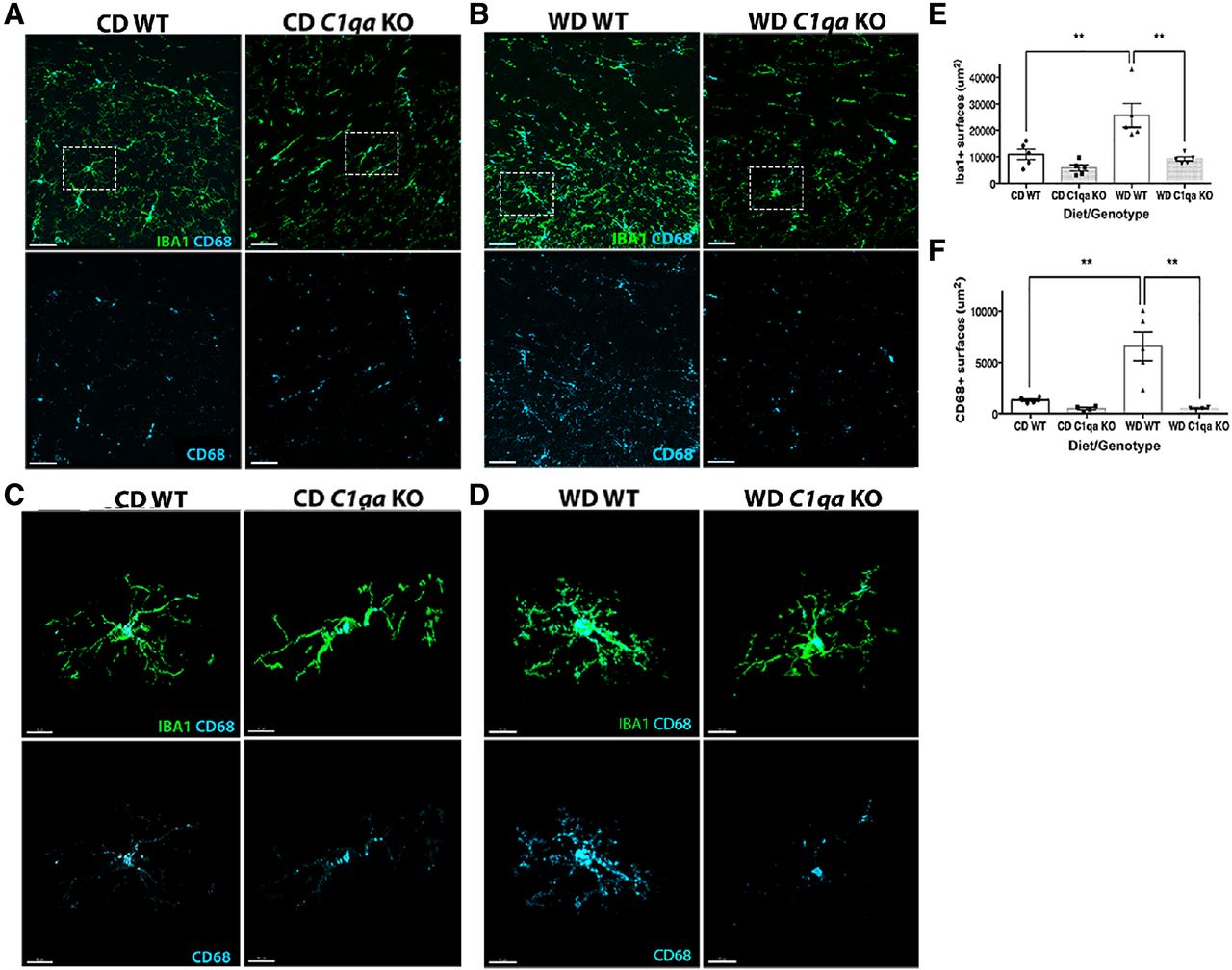
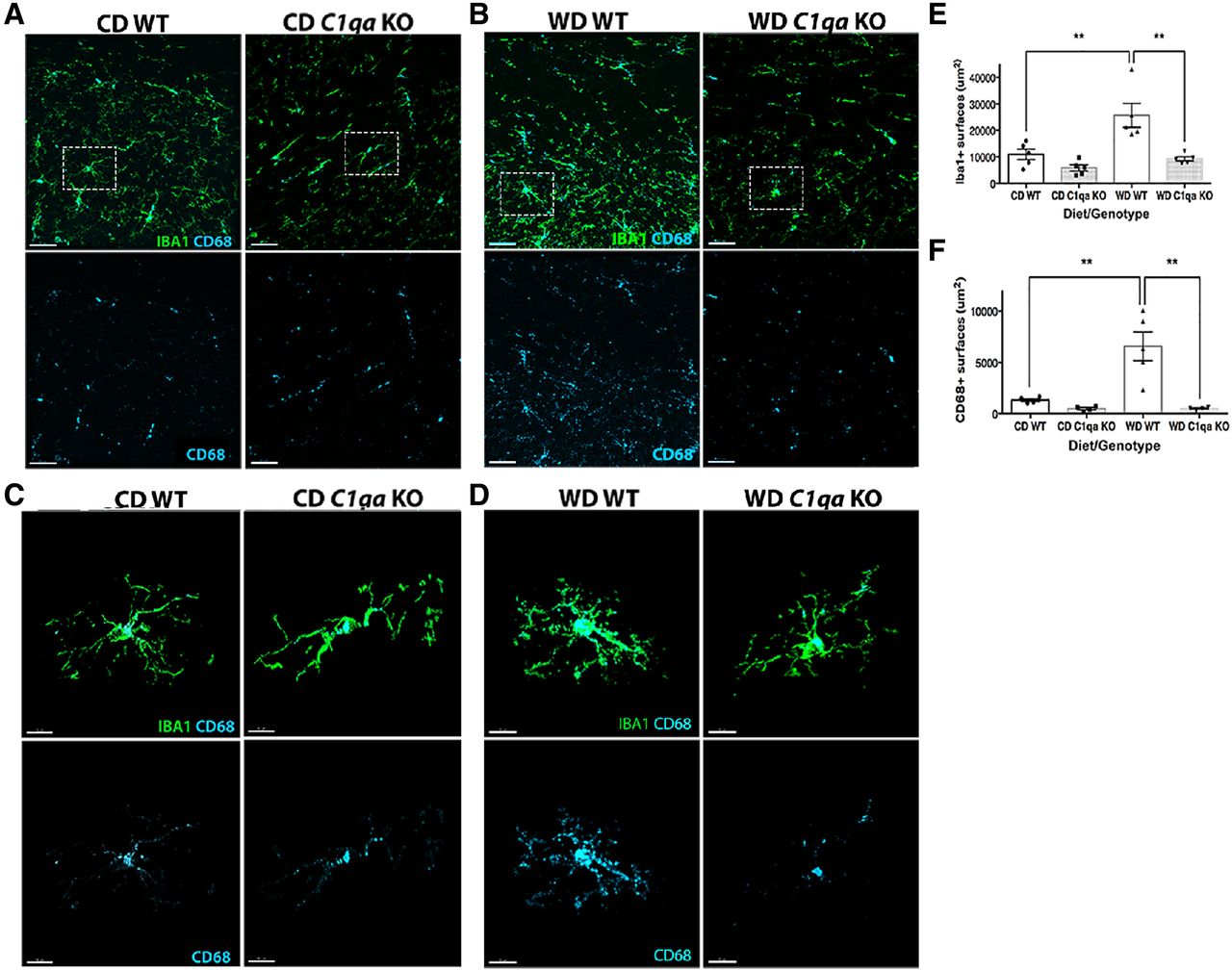
    WD-induced myeloid cell activation was prevented by C1QA deficiency. A, B, The increase in the number of IBA1+ (A, B, E) and CD68+ (A, B, F) surfaces in WD-fed WT was prevented by C1QA deficiency. C–D, Representative examples of IBA1+CD68+ microglia. Microglia from WD-fed WT mice showed the greatest levels of CD68. Representative images for quantification are shown that contain a portion of the CA1 of the hippocampus, the corpus callosum and the parietal cortex. Data are presented as mean ± SEM, n ≥ 4, **p < 0.01 by one-way ANOVA with Tukey’s post hoc test. Scale bars: 30 μm (A, B) and 10 μm (C, D).

  • Figure 8.
    • Download figure
    • Open in new tab
    • Download powerpoint
    Figure 8.

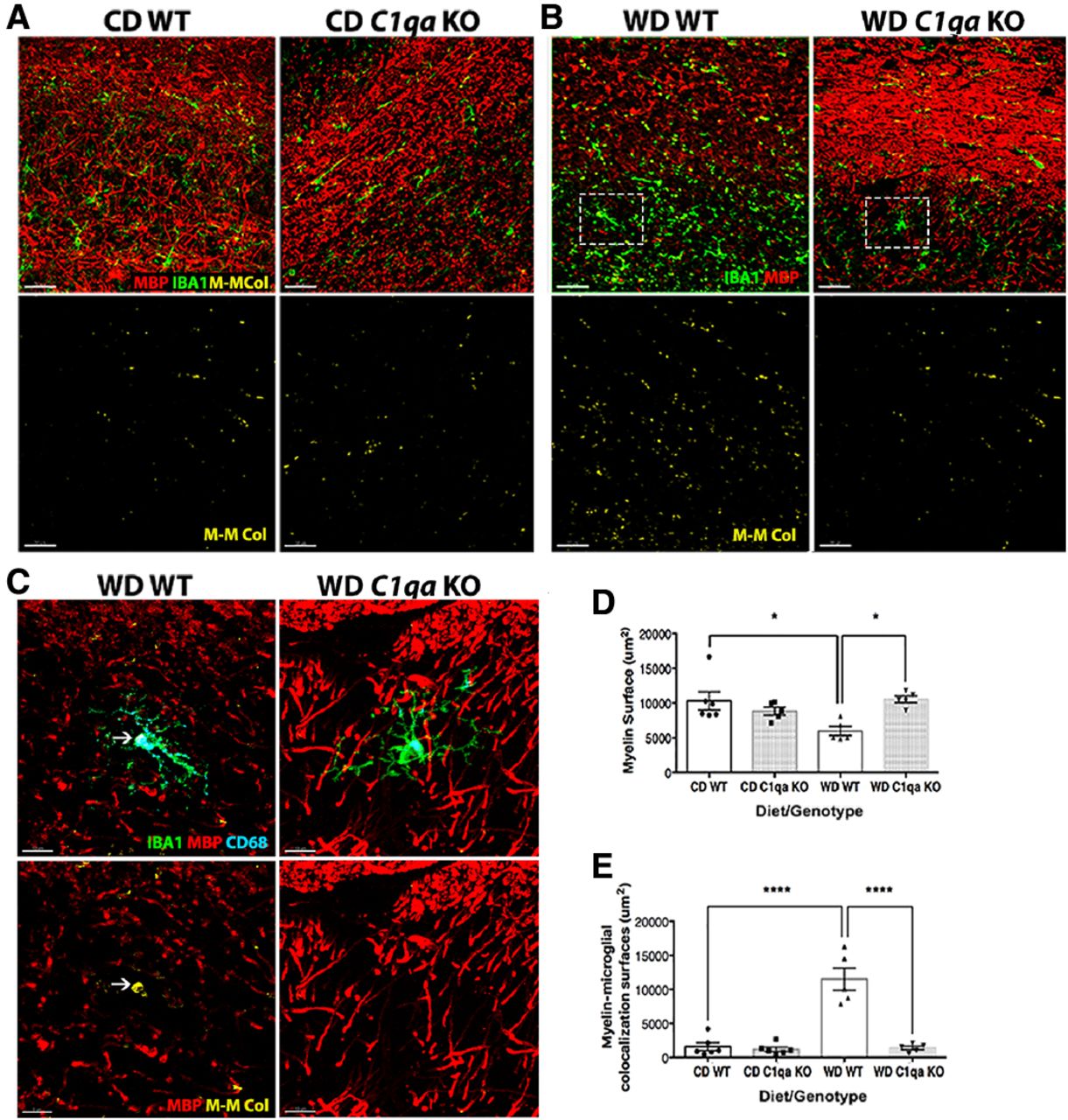
    WD-induced myelin loss was prevented by C1QA deficiency. A–D, C1QA deficiency in WD-fed mice prevented the decline of MBP+ surfaces. The white arrow (C) indicates an example of CD68+ and MBP+ surfaces surrounded by IBA1+ surfaces, suggesting engulfment. E, C1QA deficiency prevented the increased microglia-myelin interactions observed in WD-fed WT obese mice. Representative images for quantification are shown in A, B that contain a portion of the CA1 of the hippocampus, the corpus callosum and the parietal cortex. The region of the image within the white boxes in B are shown in high resolution in C. Data are presented as mean ± SEM, n ≥ 4, *p < 0.05, ****p < 0.0001 by one-way ANOVA with Tukey post hoc test. M.-M. Col = myelin-microglia colocalization. Scale bars: 30 μm (A, B) and 10 μm (C).
Extended Data

  • Figures
  • Extended Data Figure 1

    C1QA and C3 immunoreactivity in young WT and C1qa or C3 knockout mice. (A) C1QA (upper panel) and C3 (lower panel) immunoreactivity in the young WT corpus callosum is low or absence. (B) No C1QA immunoreactivity is found in the C1qa KO mice. (C) No C3 immunoreactivity is found in the C3 KO mice. Scale bars: 40μm. Download Extended Data Figure 1, DOCX file

  • Extended Data Figure 2

    Creation and validation of the C1qa KO mouse. A conditional C1qa mouse was created as part of the Knockout Mouse Project (KOMP) at The Jackson Labs (https://www.jax.org/research-and-faculty/tools/knockout-mouse-project). (A) Representation of the C1qa alleles that are available including C1qaTm1a (LacZ reporter), C1qaTm1c (floxed allele), C1qaTm1d (null allele). As has been shown for other KOMP alleles, the Tm1a allele is not capable of reporting C1qa expression using the β-galactosidase assay. Mating the C1qaTm1a mice to mice carrying FLP recombinase creates the C1qaTm1c floxed allele. Mating the C1qaTm1c mice to mice carrying CRE recombinase creates the C1qaTm1d null allele. Cell-specific ablation of C1qa can be achieved using a cell-specific Cre line. The locations of genotyping primers are shown as inward facing arrows. (B) Examples of genotyping assays for the different alleles and band sizes. Primers pairs in this example were as follows. C1qa+: F – CCGGAAGAAAAGACATCCTG; R – CTTTCACGCCCTTCAGTCCT. C1qaTm1a: F – GTGGTTTGTCCAAACTCATCAA; R – TCTCTGAGCCTCTGCTTCAA. C1qaTm1c: F – GGACGAGAGGGGAGGAGTTA; R – TTAGGACCCTTTGGCACAAC. C1qaTm1d: F – CCGGAACCGAAGTTCCTATT; R – AGACGGGGATCGTTTATTCC. Note that the C1qa+ primers amplify a larger product in mice carrying the C1qaTm1c allele. Standard PCR conditions were used with an annealing temperature of 59.3oC for C1qa+, C1qaTm1b and C1qaTm1d and 61.0oC for C1qaTm1c. (C) RNA in situ hybridization to visualize C1qa transcripts in brains sections from C1qa+/+ and C1qaTm1d/Tm1d mice. As expected, C1qa expression is absent in C1qaTm1d/Tm1d (C1qa KO) mice. Download Extended Data Figure 2, DOCX file

Back to top

In this issue

eneuro: 7 (3)
eNeuro
Vol. 7, Issue 3
Month/Month
  • Table of Contents
  • Index by author
  • Ed Board (PDF)
Email

Thank you for sharing this eNeuro article.

NOTE: We request your email address only to inform the recipient that it was you who recommended this article, and that it is not junk mail. We do not retain these email addresses.

Enter multiple addresses on separate lines or separate them with commas.
Deficiency of Complement Component C1Q Prevents Cerebrovascular Damage and White Matter Loss in a Mouse Model of Chronic Obesity
(Your Name) has forwarded a page to you from eNeuro
(Your Name) thought you would be interested in this article in eNeuro.
CAPTCHA
This question is for testing whether or not you are a human visitor and to prevent automated spam submissions.
Print
View Full Page PDF
Citation Tools
Deficiency of Complement Component C1Q Prevents Cerebrovascular Damage and White Matter Loss in a Mouse Model of Chronic Obesity
Leah C. Graham, Heidi E. Kocalis, Ileana Soto, Gareth R. Howell
eNeuro 9 April 2020, 7 (3) ENEURO.0057-20.2020; DOI: 10.1523/ENEURO.0057-20.2020

Citation Manager Formats

  • BibTeX
  • Bookends
  • EasyBib
  • EndNote (tagged)
  • EndNote 8 (xml)
  • Medlars
  • Mendeley
  • Papers
  • RefWorks Tagged
  • Ref Manager
  • RIS
  • Zotero
Respond to this article
Share
Deficiency of Complement Component C1Q Prevents Cerebrovascular Damage and White Matter Loss in a Mouse Model of Chronic Obesity
Leah C. Graham, Heidi E. Kocalis, Ileana Soto, Gareth R. Howell
eNeuro 9 April 2020, 7 (3) ENEURO.0057-20.2020; DOI: 10.1523/ENEURO.0057-20.2020
Twitter logo Facebook logo Mendeley logo
  • Tweet Widget
  • Facebook Like
  • Google Plus One

Jump to section

  • Article
    • Abstract
    • Significance Statement
    • Introduction
    • Materials and Methods
    • Results
    • Discussion
    • Acknowledgments
    • Footnotes
    • References
    • Synthesis
  • Figures & Data
  • Info & Metrics
  • eLetters
  • PDF

Keywords

  • complement
  • microglia
  • mouse
  • myelin
  • obesity
  • vasculature

Responses to this article

Respond to this article

Jump to comment:

No eLetters have been published for this article.

Related Articles

Cited By...

More in this TOC Section

Research Article: Confirmation

  • C. elegans Spastin/spas-1 Is Required for Axon Regeneration and Maintenance
  • Altered Dopamine Signaling in Extinction-Deficient Mice
  • Spatially Extensive LFP Correlations Identify Slow-Wave Sleep in Marmoset Sensorimotor Cortex
Show more Research Article: Confirmation

Disorders of the Nervous System

  • Numbers of granule cells and GABAergic boutons are correlated in shrunken sclerotic hippocampi of sea lions with temporal lobe epilepsy
  • Investigating the Role of Cortical Microglia in a Mouse Model of Viral Infection-Induced Seizures
  • Functional-Structural Coupling: Brain Reorganization in Presbycusis Is Related to Cognitive Impairment
Show more Disorders of the Nervous System

Subjects

  • Disorders of the Nervous System
  • Home
  • Alerts
  • Follow SFN on BlueSky
  • Visit Society for Neuroscience on Facebook
  • Follow Society for Neuroscience on Twitter
  • Follow Society for Neuroscience on LinkedIn
  • Visit Society for Neuroscience on Youtube
  • Follow our RSS feeds

Content

  • Early Release
  • Current Issue
  • Latest Articles
  • Issue Archive
  • Blog
  • Browse by Topic

Information

  • For Authors
  • For the Media

About

  • About the Journal
  • Editorial Board
  • Privacy Notice
  • Contact
  • Feedback
(eNeuro logo)
(SfN logo)

Copyright © 2026 by the Society for Neuroscience.
eNeuro eISSN: 2373-2822

The ideas and opinions expressed in eNeuro do not necessarily reflect those of SfN or the eNeuro Editorial Board. Publication of an advertisement or other product mention in eNeuro should not be construed as an endorsement of the manufacturer’s claims. SfN does not assume any responsibility for any injury and/or damage to persons or property arising from or related to any use of any material contained in eNeuro.