Main menu

  • HOME
  • CONTENT
    • Early Release
    • Featured
    • Current Issue
    • Issue Archive
    • Blog
    • Collections
    • Podcast
  • TOPICS
    • Cognition and Behavior
    • Development
    • Disorders of the Nervous System
    • History, Teaching and Public Awareness
    • Integrative Systems
    • Neuronal Excitability
    • Novel Tools and Methods
    • Sensory and Motor Systems
  • ALERTS
  • FOR AUTHORS
  • ABOUT
    • Overview
    • Editorial Board
    • For the Media
    • Privacy Policy
    • Contact Us
    • Feedback
  • SUBMIT

User menu

Search

  • Advanced search
eNeuro
eNeuro

Advanced Search


  • HOME
  • CONTENT
    • Early Release
    • Featured
    • Current Issue
    • Issue Archive
    • Blog
    • Collections
    • Podcast
  • TOPICS
    • Cognition and Behavior
    • Development
    • Disorders of the Nervous System
    • History, Teaching and Public Awareness
    • Integrative Systems
    • Neuronal Excitability
    • Novel Tools and Methods
    • Sensory and Motor Systems
  • ALERTS
  • FOR AUTHORS
  • ABOUT
    • Overview
    • Editorial Board
    • For the Media
    • Privacy Policy
    • Contact Us
    • Feedback
  • SUBMIT
PreviousNext
Research ArticleConfirmation, Disorders of the Nervous System

TRPV1 Agonist, Capsaicin, Induces Axon Outgrowth after Injury via Ca2+/PKA Signaling

Erin Frey, Scott Karney-Grobe, Trevor Krolak, Jeff Milbrandt and Aaron DiAntonio
eNeuro 21 May 2018, 5 (3) ENEURO.0095-18.2018; https://doi.org/10.1523/ENEURO.0095-18.2018
Erin Frey
1Department of Developmental Biology, Hope Center for Neurological Disorders, Washington University School of Medicine, St. Louis, MO 63110, USA
  • Find this author on Google Scholar
  • Find this author on PubMed
  • Search for this author on this site
Scott Karney-Grobe
1Department of Developmental Biology, Hope Center for Neurological Disorders, Washington University School of Medicine, St. Louis, MO 63110, USA
  • Find this author on Google Scholar
  • Find this author on PubMed
  • Search for this author on this site
Trevor Krolak
1Department of Developmental Biology, Hope Center for Neurological Disorders, Washington University School of Medicine, St. Louis, MO 63110, USA
  • Find this author on Google Scholar
  • Find this author on PubMed
  • Search for this author on this site
Jeff Milbrandt
2Department of Genetics, Hope Center for Neurological Disorders, Washington University School of Medicine, St. Louis, MO 63110, USA
  • Find this author on Google Scholar
  • Find this author on PubMed
  • Search for this author on this site
Aaron DiAntonio
1Department of Developmental Biology, Hope Center for Neurological Disorders, Washington University School of Medicine, St. Louis, MO 63110, USA
  • Find this author on Google Scholar
  • Find this author on PubMed
  • Search for this author on this site
  • ORCID record for Aaron DiAntonio
  • Article
  • Figures & Data
  • Info & Metrics
  • eLetters
  • PDF
Loading

Article Figures & Data

Figures

  • Figure 1.
    • Download figure
    • Open in new tab
    • Download powerpoint
    Figure 1.

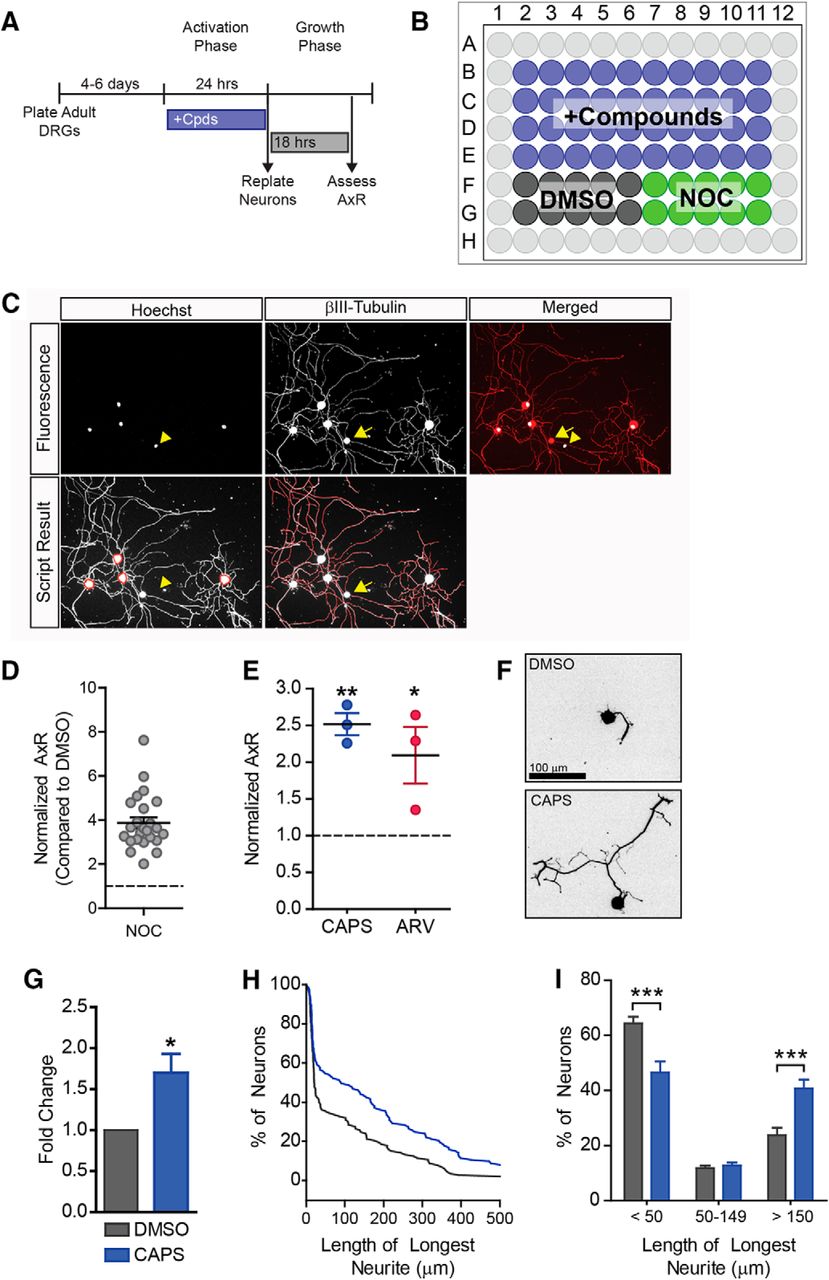
    Drug screen identifies TRPV1 agonists as progrowth drugs. A drug screen was performed to identify drugs that could induce a regenerative state. A, B, Experimental design. After 4–6 d in culture, neurons were treated for 24 h, then drugs were washed out and neurons were replated. After 18 h of growth, neurons were fixed and stained to assess axon growth. 40 compounds were tested per plate with 10 negative controls (DMSO) and 10 positive controls (NOC). Outer wells were filled with water to minimize evaporation. C, Fluorescence images for Hoechst (nuclei) and βIII-tubulin (neuron specific marker) are shown. Note that the non-neuronal cell (βIII-tubulin negative nucleus, yellow arrowhead) is not counted. Note the debris (yellow arrow) is not traced. Neurite tracings are shown in red. D, Nocodazole induces robust growth in this high-throughput assay. Nocadazole-treated wells were normalized to DMSO-treated wells from the same plate, therefore DMSO = 1 (dashed line). Each data point represents one plate. Twenty-four plates were used in the screen. E, In this screen, two TRPV1 agonists: capsaicin (CAPS) and arvanil (ARV) increased axon outgrowth compared to DMSO, (n = 3 independent experiments). Capsaicin was validated by analyzing axon growth from individual neurons (10 µM, n = 5 independent experiments). Representative images are shown (F). Capsaicin induced a ∼1.7-fold increase in mean neurite length (G) and shifted the distribution of cells toward having longer neurites (H, I). A representative cumulative distribution is shown in H.

  • Figure 2.
    • Download figure
    • Open in new tab
    • Download powerpoint
    Figure 2.

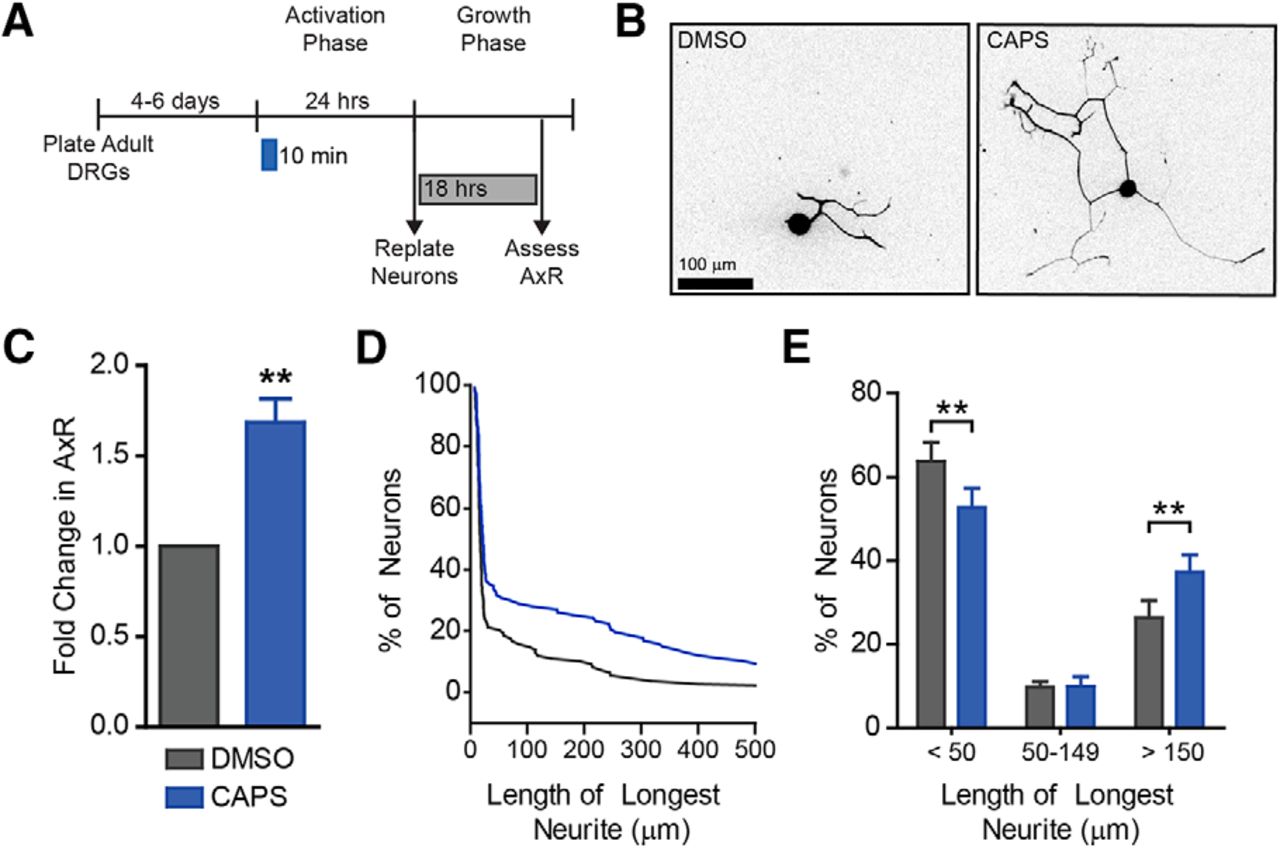
    Capsaicin pulse induces axon outgrowth. Since TRPV1 opens transiently in response to stimulation, neurons were treated transiently with a 10-min pulse of capsaicin (A). After 10 min, capsaicin was removed. Neurons were replated 24 h later and grown for 18 h. Representative images are shown (B). Capsaicin induced a ∼1.7-fold increase in mean neurite length (C) and a subset of neurons extended longer neurites (D, E). A representative cumulative distribution is shown in D. n = 5 independent experiments.

  • Figure 3.
    • Download figure
    • Open in new tab
    • Download powerpoint
    Figure 3.

    TRPV1 is required for capsaicin-induced outgrowth. We used capsazepine, a capsaicin antagonist, and TRPV1 KO mice to determine if capsaicin-induced outgrowth required TRPV1. Neurons were treated with capsazepine (CPZ, 10 µM) for 10 min before capsaicin. After 10 min of capsaicin treatment, both drugs were washed away. Neurons were replated after 24 h and grown for 18 h. Representative images are shown (A). Capsazepine blocked capsaicin-induced outgrowth (B) and the increased proportion of neurons with longer neurites (C). n = 4 independent experiments. WT and TRPV1 KO neurons were treated as in Fig. 2A. TRPV1 KO completely blocked capsaicin-induced outgrowth in both measures, mean neurite length (D, E) and distribution (F). Data are from 4 independent experiments.

  • Figure 4.
    • Download figure
    • Open in new tab
    • Download powerpoint
    Figure 4.

    Capsaicin induces axon outgrowth in NF200– nociceptive neurons. To determine if outgrowth was being induced in non-nociceptive (NF200+) or nociceptive (NF200–) neurons, we performed the same experiment described in Fig. 2A, then colabeled cells for βIII-tubulin and NF200. Yellow arrows indicate NF200– neurons (A). NF200– neurons (yellow arrow) showed increased mean neurite length (B) with a significant shift in the percentage of cells extending long neurites (C). No change was observed in NF200+ neurons treated with capsaicin. Mean neurite length was normalized to the entire population (NF200+ and NF200–) of DMSO-treated neurons. n = 4 independent experiments.

  • Figure 5.
    • Download figure
    • Open in new tab
    • Download powerpoint
    Figure 5.

    Capsaicin upregulates the regeneration marker SCG10. To determine if the pro-regeneration program had been activated, we assessed upregulation of the regeneration marker SCG10. Neurons were treated with capsaicin for 10 min. 24 h later, neurons were fixed and stained for SCG10. Representative images (A) show an increase in mean SCG10 intensity (B) as well as an increase in the percentage of neurons that have robust levels (>1.75) of SCG10 in the cell body (C). n = 5 independent experiments.

  • Figure 6.
    • Download figure
    • Open in new tab
    • Download powerpoint
    Figure 6.

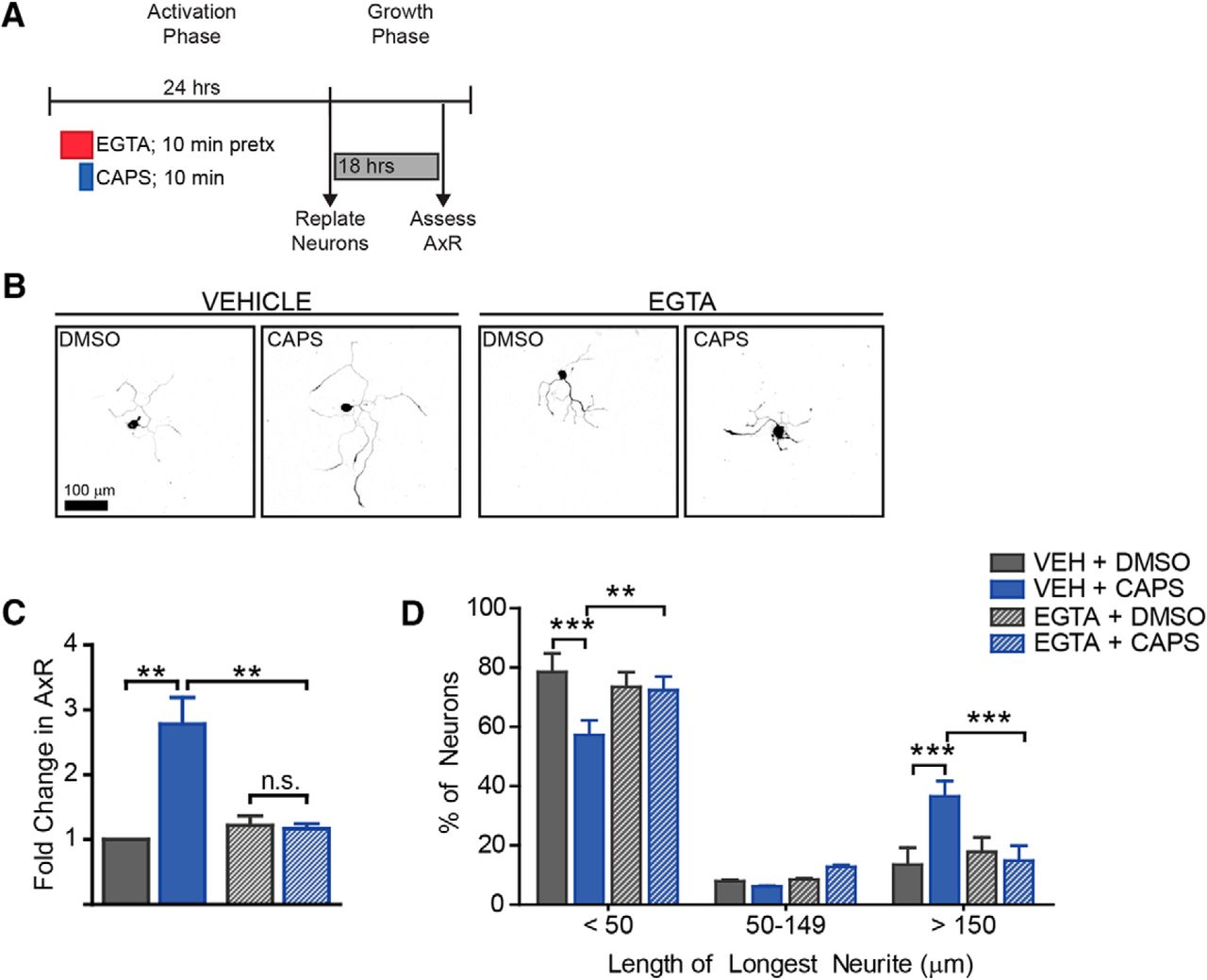
    Extracellular calcium is required for capsaicin-induced outgrowth. To determine if Ca2+ influx was required for outgrowth induced by capsaicin, neurons were treated with EGTA to chelate extracellular calcium for 10 min before capsaicin addition. After the 10-min capsaicin pulse, both drugs were removed, and neurons were cultured for 24 h before replating (A). Representative images (B) illustrate that EGTA robustly blocked capsaicin-induced outgrowth. EGTA blocked the increase in mean neurite length (C) and the increased number of neurons with longer neurites (D). n = 3 independent experiments.

  • Figure 7.
    • Download figure
    • Open in new tab
    • Download powerpoint
    Figure 7.

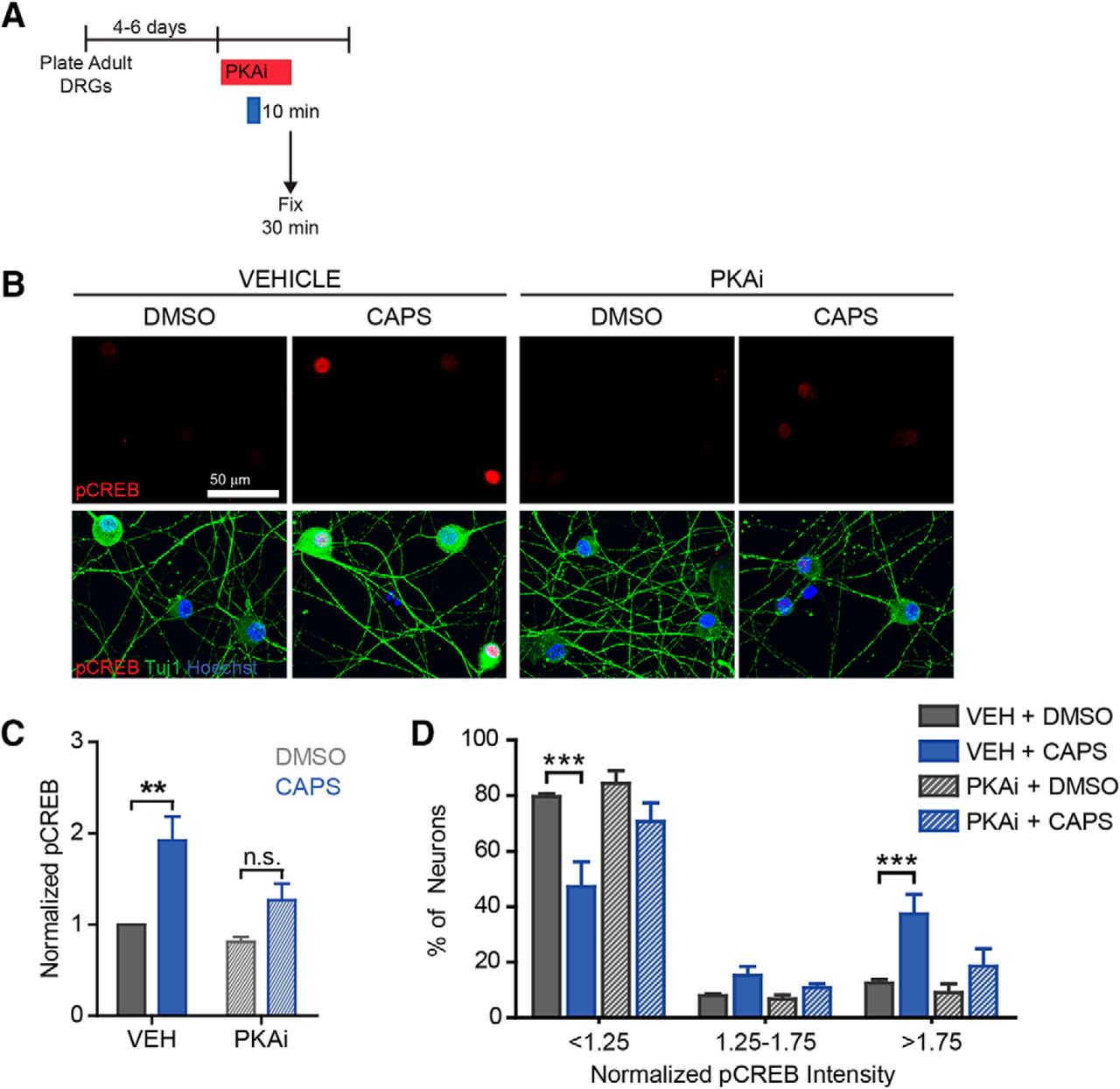
    Capsaicin induces PKA-dependent pCREB. To identify the signaling pathway involved in capsaicin-induced outgrowth, we assessed phosphorylation of the pro-regenerative transcription factor CREB. A, Vehicle or H-89 (PKAi, 5 µM) was applied 30 min before DMSO/capsaicin treatment. After 10 min, drugs were washed out, and vehicle/PKAi were reapplied. 20 min later neurons were fixed and stained (B–D). Overall, there was an ∼2-fold increase in pCREB intensity (C, n = 4 independent experiments). D, The distribution showed that only a subset of neurons had robust pCREB upregulation. Capsaicin-induced pCREB was decreased by PKA inhibition.

  • Figure 8.
    • Download figure
    • Open in new tab
    • Download powerpoint
    Figure 8.

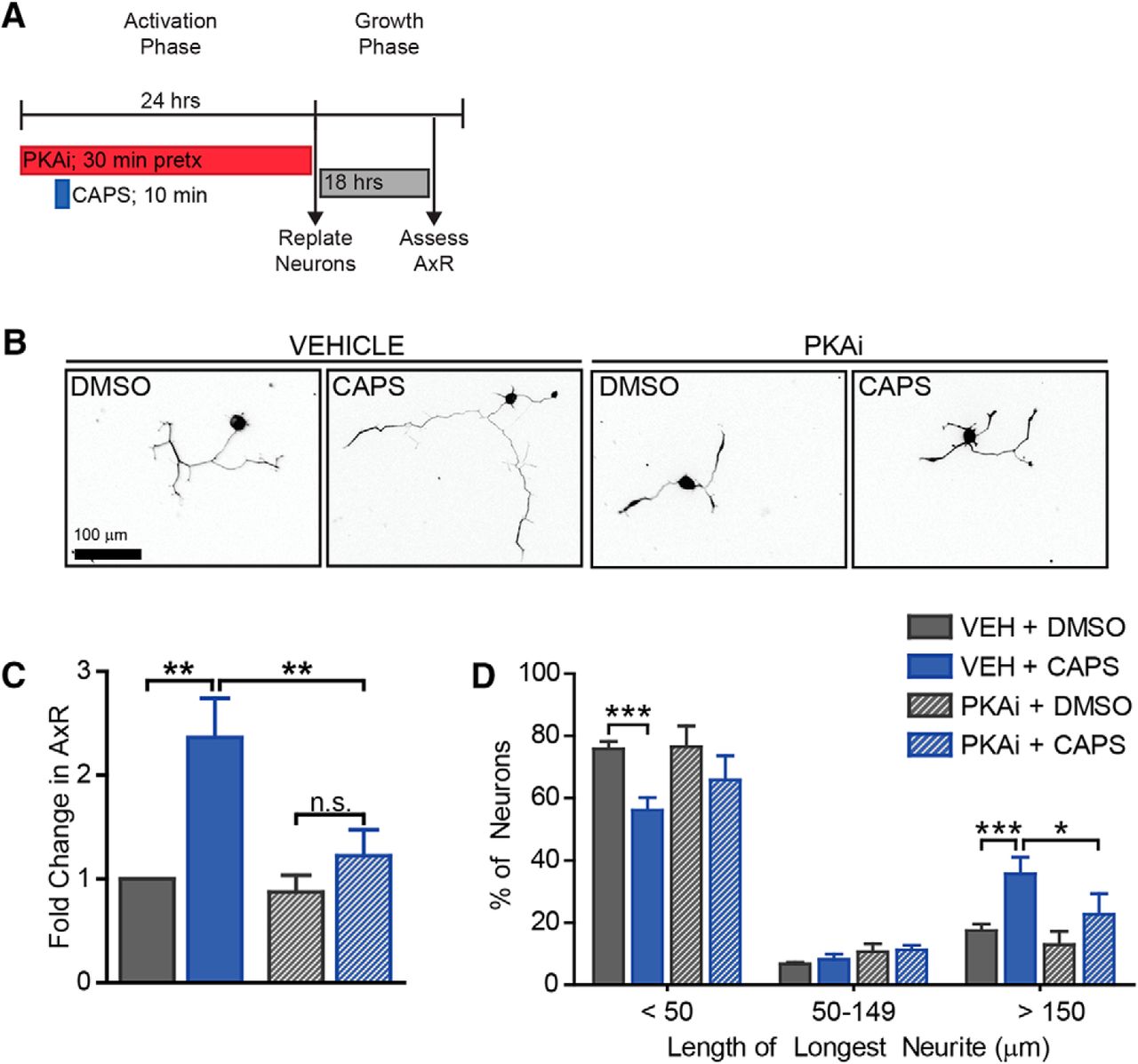
    Capsaicin-induced axon growth is PKA-dependent. To determine if PKA was required for axon growth, we pretreated neurons with PKAi for 30 min before capsaicin treatment. PKAi remained on the cells during capsaicin treatment and during the rest of the activation phase (A). PKAi diminished the increase observed in mean neurite length (B,C) and the increase in the proportion of neurons with long neurites (D). n = 3 independent experiments.

  • Figure 9.
    • Download figure
    • Open in new tab
    • Download powerpoint
    Figure 9.

    Capsaicin applied to the sciatic nerve induces axonal outgrowth. Progrowth signaling can be activated in vivo and observed in vitro (A). Preconditioning nerve crush induces robust axon outgrowth (B–D, n = 3). To determine if this capsaicin pathway is active in vivo, capsaicin was applied locally to the mouse sciatic nerve. After 2 d, L4/5 DRG were removed and cultured for 18 h to determine if local capsaicin had induced a pro-regenerative program. Representative images (E) show that capsaicin treatment induced axon outgrowth and increased mean neurite length (G) and shifted a subset of neurons toward longer growth (G). n = 7 independent experiments. H, Representative images of sciatic nerve show that capsaicin was insufficient to induce regeneration in the sciatic nerve.

Back to top

In this issue

eneuro: 5 (3)
eNeuro
Vol. 5, Issue 3
May/June 2018
  • Table of Contents
  • Index by author
Email

Thank you for sharing this eNeuro article.

NOTE: We request your email address only to inform the recipient that it was you who recommended this article, and that it is not junk mail. We do not retain these email addresses.

Enter multiple addresses on separate lines or separate them with commas.
TRPV1 Agonist, Capsaicin, Induces Axon Outgrowth after Injury via Ca2+/PKA Signaling
(Your Name) has forwarded a page to you from eNeuro
(Your Name) thought you would be interested in this article in eNeuro.
CAPTCHA
This question is for testing whether or not you are a human visitor and to prevent automated spam submissions.
Print
View Full Page PDF
Citation Tools
TRPV1 Agonist, Capsaicin, Induces Axon Outgrowth after Injury via Ca2+/PKA Signaling
Erin Frey, Scott Karney-Grobe, Trevor Krolak, Jeff Milbrandt, Aaron DiAntonio
eNeuro 21 May 2018, 5 (3) ENEURO.0095-18.2018; DOI: 10.1523/ENEURO.0095-18.2018

Citation Manager Formats

  • BibTeX
  • Bookends
  • EasyBib
  • EndNote (tagged)
  • EndNote 8 (xml)
  • Medlars
  • Mendeley
  • Papers
  • RefWorks Tagged
  • Ref Manager
  • RIS
  • Zotero
Respond to this article
Share
TRPV1 Agonist, Capsaicin, Induces Axon Outgrowth after Injury via Ca2+/PKA Signaling
Erin Frey, Scott Karney-Grobe, Trevor Krolak, Jeff Milbrandt, Aaron DiAntonio
eNeuro 21 May 2018, 5 (3) ENEURO.0095-18.2018; DOI: 10.1523/ENEURO.0095-18.2018
Twitter logo Facebook logo Mendeley logo
  • Tweet Widget
  • Facebook Like
  • Google Plus One

Jump to section

  • Article
    • Abstract
    • Significance Statement
    • Introduction
    • Materials and Methods
    • Results
    • Discussion
    • Conclusion
    • Acknowledgments
    • Footnotes
    • References
    • Synthesis
  • Figures & Data
  • Info & Metrics
  • eLetters
  • PDF

Keywords

  • axon regeneration
  • capsaicin
  • neurite outgrowth
  • PKA
  • Preconditioning
  • TRPV1

Responses to this article

Respond to this article

Jump to comment:

No eLetters have been published for this article.

Related Articles

Cited By...

More in this TOC Section

Confirmation

  • Evaluating the Burstlet Theory of Inspiratory Rhythm and Pattern Generation
  • Sex and Individual Differences in Alcohol Intake Are Associated with Differences in Ketamine Self-Administration Behaviors and Nucleus Accumbens Dendritic Spine Density
  • Developmental Nicotine Exposure Alters Synaptic Input to Hypoglossal Motoneurons and Is Associated with Altered Function of Upper Airway Muscles
Show more Confirmation

Disorders of the Nervous System

  • Numbers of granule cells and GABAergic boutons are correlated in shrunken sclerotic hippocampi of sea lions with temporal lobe epilepsy
  • Investigating the Role of Cortical Microglia in a Mouse Model of Viral Infection-Induced Seizures
  • Functional-Structural Coupling: Brain Reorganization in Presbycusis Is Related to Cognitive Impairment
Show more Disorders of the Nervous System

Subjects

  • Disorders of the Nervous System
  • Home
  • Alerts
  • Follow SFN on BlueSky
  • Visit Society for Neuroscience on Facebook
  • Follow Society for Neuroscience on Twitter
  • Follow Society for Neuroscience on LinkedIn
  • Visit Society for Neuroscience on Youtube
  • Follow our RSS feeds

Content

  • Early Release
  • Current Issue
  • Latest Articles
  • Issue Archive
  • Blog
  • Browse by Topic

Information

  • For Authors
  • For the Media

About

  • About the Journal
  • Editorial Board
  • Privacy Notice
  • Contact
  • Feedback
(eNeuro logo)
(SfN logo)

Copyright © 2026 by the Society for Neuroscience.
eNeuro eISSN: 2373-2822

The ideas and opinions expressed in eNeuro do not necessarily reflect those of SfN or the eNeuro Editorial Board. Publication of an advertisement or other product mention in eNeuro should not be construed as an endorsement of the manufacturer’s claims. SfN does not assume any responsibility for any injury and/or damage to persons or property arising from or related to any use of any material contained in eNeuro.